


Why Biopolymer Innovation Is Becoming a Game-Changer for Packaging Businesses
- May 6
- 5 min read
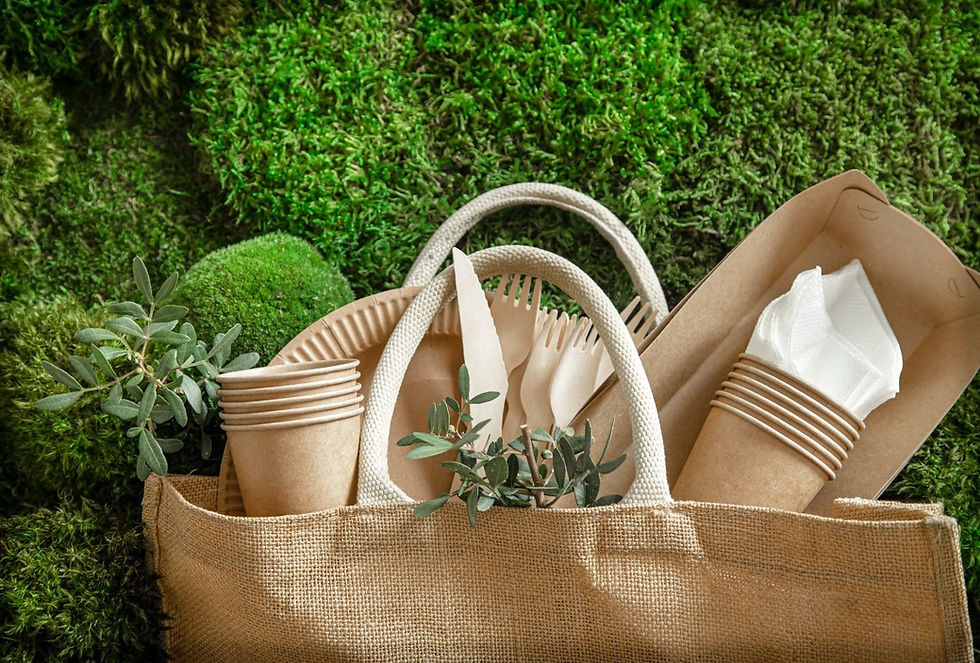
The packaging industry is going through one of the biggest shifts it has seen in decades. Brands are rethinking what their boxes, wrappers, and containers are made of, and why it matters. At the center of this change is a category of materials that was once considered too niche or too expensive to scale. That is no longer the case.
The Problem With Conventional Packaging
For a long time, businesses chose packaging materials based on cost, durability, and shelf appeal. Sustainability was an afterthought. The result is well documented: landfills overwhelmed with single-use plastic, oceans carrying billions of tons of waste, and consumers growing increasingly frustrated with brands that have not adapted.
Governments around the world are now adding pressure through bans, taxes, and extended producer responsibility laws. Businesses that relied on traditional petroleum-based packaging are facing both regulatory headaches and reputational risk. This is where bioplastics began entering the conversation in a serious way.
Bioplastics, which are derived from renewable sources like corn starch, sugarcane, or algae, offer a path away from fossil-fuel dependence. Early versions had limitations in performance and cost. But the technology has improved significantly, and today many bioplastic materials can match conventional plastics in strength and flexibility while offering a much better environmental profile.
What Makes Biopolymer Innovation Different Now
The word "biopolymer" refers to polymers that are produced by living organisms or derived from natural, biological sources. While the concept is not new, what is new is the level of investment, research, and commercial application happening right now.
Companies are no longer experimenting with biopolymers in a lab setting. They are integrating them into real supply chains, producing at scale, and bringing down costs in ways that were not possible even five years ago. Startups and established chemical companies alike are racing to develop materials that are not just biodegradable, but that also perform well under real packaging conditions: moisture resistance, printability, heat tolerance, and load-bearing capacity.
What this means for a packaging business is simple. You now have access to materials that can satisfy both your operational needs and your sustainability commitments without having to choose between the two.
Why Packaging Businesses Specifically Stand to Gain
Packaging businesses sit at a critical point in the supply chain. They supply to food companies, e-commerce brands, pharmaceutical companies, and retailers, all of whom are under growing pressure from their own customers and investors to demonstrate environmental responsibility.
By offering biopolymer-based packaging options, a packaging business can open doors to new contracts, differentiate itself from competitors, and position itself as a long-term partner for brands that are building sustainability into their core strategy.
There is also a pricing dynamic worth noting. Early adoption of new materials often comes with a cost premium, but businesses that invest now in supplier relationships, machinery adaptation, and material testing will be better positioned when biopolymer materials reach cost parity with conventional options. That point is approaching faster than many expected.
Industry Momentum and Where It Is Heading
Trade events like the Circular Packaging Summit have brought together manufacturers, material scientists, brand owners, and policymakers to share progress and set direction. These gatherings reflect how seriously the industry is taking this transition. The agenda is no longer about whether to move toward sustainable packaging, but how fast and through what materials.
Investment in bio-based material research has grown steadily, and consumer surveys consistently show that packaging sustainability influences purchasing decisions, particularly among younger buyers. For packaging businesses, these are clear signals that the market is moving in one direction.
Case Study 1: LEGO's Sustainable Packaging Transition
LEGO, a company not typically associated with packaging innovation, made headlines when it committed to replacing its plastic bags inside toy boxes with paper-based alternatives made from certified sustainable sources. More relevant to biopolymers, the company has been actively testing plant-based materials for its core products and packaging components as part of a broader sustainability roadmap. What this shows is that even companies with highly specific material requirements — where consistency and precision matter enormously — are finding workable paths forward with bio-based alternatives.
Case Study 2: Danone's PLA Yogurt Cup Pilot
Closer to the food packaging world, Danone has piloted bioplastic-based yogurt cups in select European markets using PLA (polylactic acid) derived from plant starch. The initiative was part of a wider effort to reduce virgin plastic use across its product lines. Early feedback confirmed that consumers responded positively to the change, and the material held up well under cold-chain distribution requirements. The pilot demonstrated that biopolymer packaging can meet real performance benchmarks outside of laboratory conditions, which is often the question businesses most need answered before committing to the transition.
Both examples point to the same conclusion: the companies moving early are gathering practical knowledge that will become a competitive advantage as material costs continue to fall and regulatory requirements tighten.
Practical Considerations for Businesses Making the Switch
Switching to biopolymer-based packaging is not something that happens overnight. It requires supplier evaluation, material testing, equipment assessment, and in some cases, staff training. Businesses also need to be careful about greenwashing. Not every "bio-based" label means the product is compostable or truly biodegradable under standard conditions. Understanding the specific certifications, such as EN 13432 in Europe or ASTM D6400 in the United States, is important before making claims to customers.
Despite these challenges, the businesses that are working through them now are building a genuine competitive advantage. The transition is manageable when approached in stages, with clear goals and reliable material partners.
Final Thoughts
The packaging industry is not going to look the same in ten years. The businesses that recognize the opportunity in biopolymer innovation today, rather than waiting until change is forced upon them, will be in a much stronger position to grow, attract clients, and contribute meaningfully to a packaging system that works better for everyone.
This is not about following a trend. It is about recognizing where the market, the regulations, and consumer expectations are heading and getting there ahead of the competition.
Frequently Asked Questions
1. What is the difference between biopolymers and regular plastics?
Regular plastics are made from petroleum, a fossil fuel. Biopolymers come from biological or renewable sources like plants or microorganisms. Some biopolymers are biodegradable, while others are simply bio-based but behave similarly to conventional plastic in terms of disposal.
2. Are biopolymer packaging materials more expensive?
Currently, they can cost more than conventional packaging, but the gap is narrowing. Businesses that begin the transition now often benefit from better pricing as volume increases and production technology matures.
3. Can biopolymer packaging match conventional packaging in performance?
Yes, in many applications. Modern biopolymer materials have improved significantly in heat resistance, moisture barriers, and structural integrity. The right material depends on the specific use case, and testing is always recommended before full-scale adoption.
4. How do customers respond to biopolymer packaging?
Research consistently shows that consumers, particularly younger demographics, respond positively to sustainable packaging. It can strengthen brand perception and loyalty, especially when the environmental credentials are clearly communicated and verifiable.
5. Where can packaging businesses learn more about industry standards and opportunities?
Industry publications, certification bodies, and professional events are good starting points. Engaging with material suppliers and attending trade events focused on sustainable packaging can help businesses stay current on both available materials and emerging regulations.


Comments